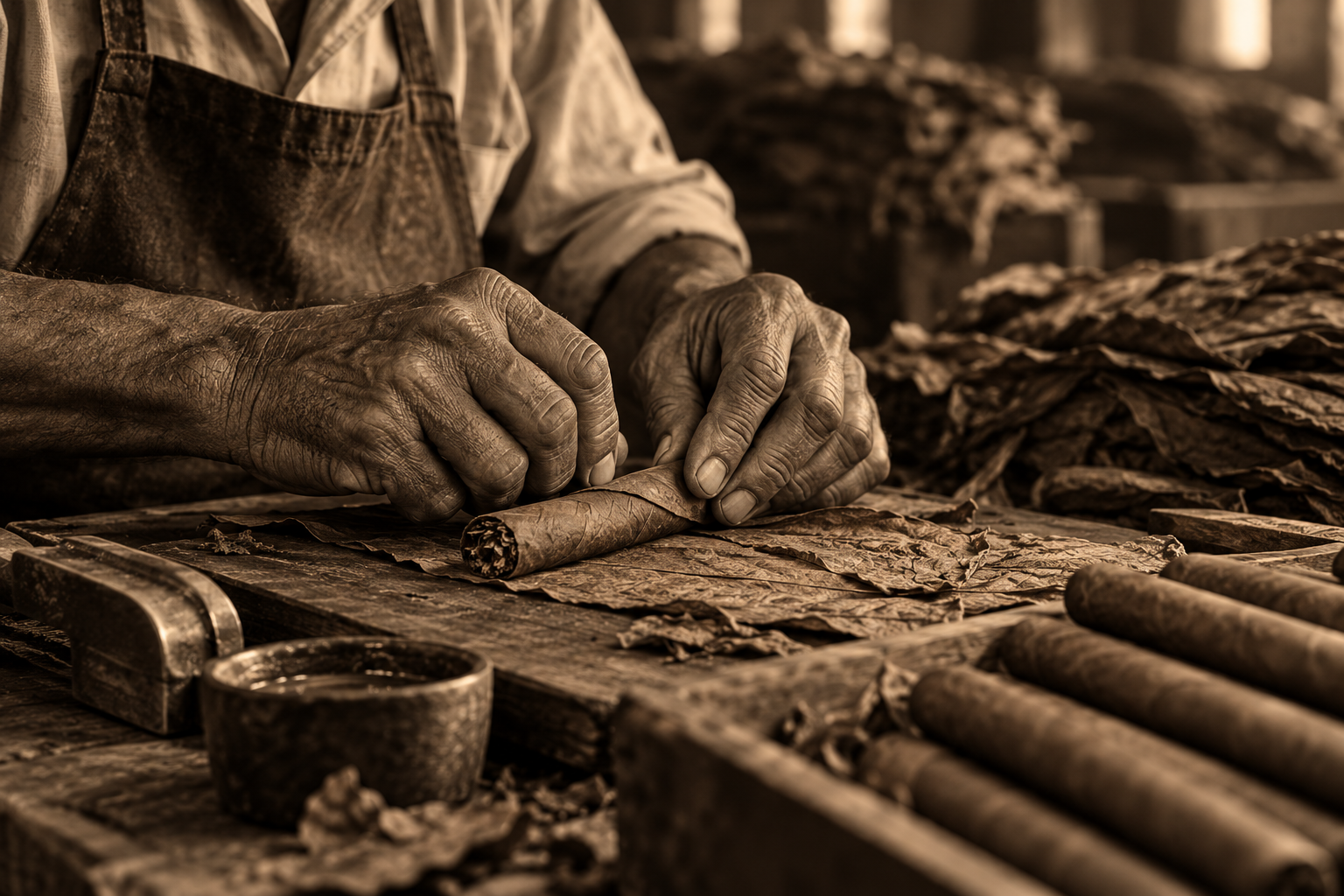
When you light a Big Daddy cigar, you're participating in a tradition that stretches back well over a century. The Dominican Republic's relationship with tobacco is ancient — older than its reputation, older than its modern cigar industry, older than most people realize. Understanding that history doesn't just make for interesting reading. It explains why Dominican cigars taste the way they do, and why Big Daddy is built the way it is.
Tobacco Before the Industry
Tobacco has been cultivated in Hispaniola — the island shared today by the Dominican Republic and Haiti — since the indigenous Taíno people introduced it to early European explorers in the late 15th century. Christopher Columbus's crew encountered tobacco smoking on their first Caribbean landing, and the plant they found was already deeply embedded in the island's culture and soil.
For centuries, tobacco was grown across the island for local use and limited export. But it wasn't until the 19th and early 20th centuries that organized cigar production — with its own factories, rolling traditions, and commercial networks — began to take shape in earnest.
The Cuban Influence: 1960s and Beyond
The single most consequential event in Dominican cigar history wasn't something that happened in the Dominican Republic. It happened in Cuba.
When Fidel Castro nationalized Cuba's tobacco industry in the early 1960s, he triggered an exodus. Cuba's master cigar makers, factory owners, and tobacco families — the custodians of generations of rolling knowledge and blending expertise — left. Many of them went to the Dominican Republic, attracted by its similar climate, fertile soil, and stable growing conditions.
"The Cuban revolution didn't end the golden age of Caribbean cigars. It moved it 700 miles east."
The arrival of these master craftsmen transformed the Dominican industry almost overnight. Cuban techniques, refined over generations, were transplanted into Dominican workshops and applied to local tobacco with remarkable results. Within a decade, the Dominican Republic was producing cigars that stood comparison with anything from Havana.
The Santiago Boom
By the 1970s and 1980s, Santiago de los Caballeros — the capital of the Cibao Valley — had become the center of gravity for Dominican cigar production. New factories opened, international investment arrived, and the region developed the infrastructure of a genuine cigar capital: curing barns, aging warehouses, rolling workshops staffed by skilled artisans who had grown up in the trade.
Major international cigar brands began sourcing from the Dominican Republic, recognizing that the combination of local tobacco and transplanted Cuban expertise was producing something exceptional. By the mid-1980s, the Dominican Republic had quietly become the world's leading exporter of premium cigars to the United States — a position it has held ever since.
The Cigar Boom of the 1990s
The early 1990s brought the great American cigar boom — a surge in premium cigar consumption unlike anything the industry had seen in decades. Demand skyrocketed. New brands launched. Connoisseurs discovered what serious smokers already knew: Dominican cigars, made in the Cibao Valley by artisans trained in the Cuban tradition, were among the finest in the world.
The boom tested the industry's capacity but ultimately strengthened it. Dominican producers who maintained quality standards emerged with stronger reputations. Those who cut corners to meet demand paid for it in the decade that followed. The boom sorted the serious from the casual, and the Dominican Republic's best producers came out the other side with the credibility that only consistency earns.
The Living Tradition Today
Today, the Dominican Republic's cigar industry is mature, confident, and still innovating. The generational knowledge that arrived with Cuban exiles has been absorbed into Dominican culture — it no longer belongs to one group of immigrants, it belongs to the island. Families who began rolling in the 1970s have trained their children and grandchildren. Master blenders who learned from Cuban exiles are now passing their knowledge to a new generation of Dominican artisans.
Big Daddy is a product of this living tradition. Every cigar is hand-rolled in the Dominican Republic by artisans who carry this history in their hands. When you smoke one, you're smoking the result of over a century of tobacco cultivation, decades of accumulated rolling mastery, and an unbroken commitment to producing something worth being proud of.
Experience it for yourself through Cigar Imports USA — the trusted source for premium Dominican cigars in the US market.
Be Part of the Tradition
Big Daddy Cigars are available now through our exclusive distribution partner — Cigar Imports USA.
Shop at Cigar Imports USA